US appeals court declares 158-year-old home distilling ban unconstitutional
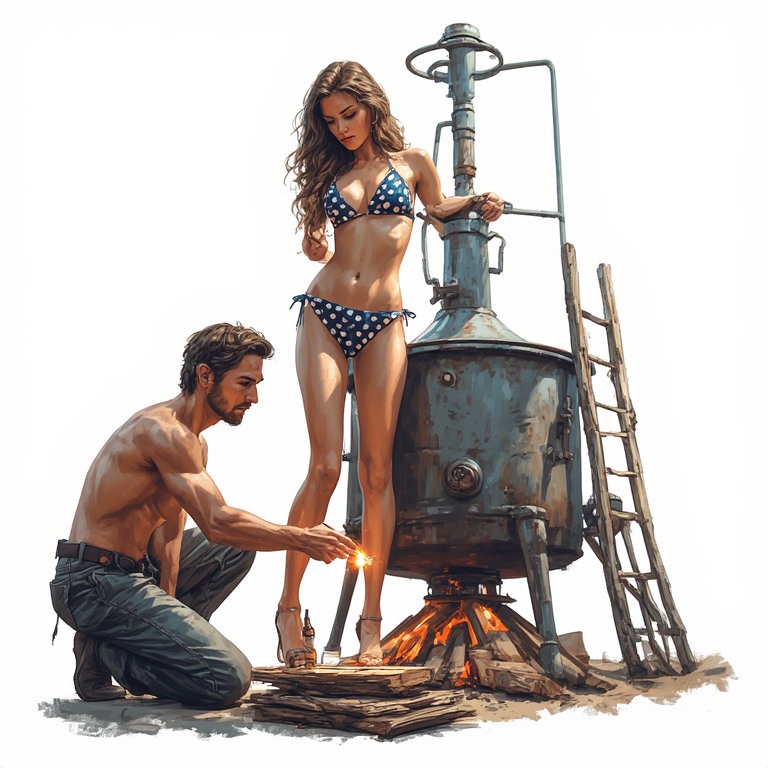
April 10 (Reuters) – A U.S. appeals court on Friday declared unconstitutional a nearly 158-year-old federal ban on home distilling, calling it an unnecessary and improper means for Congress to exercise its power to tax.
The 5th U.S. Circuit Court of Appeals in New Orleans ruled in favor of the nonprofit Hobby Distillers Association and for its 1,300 members.
They argued that people should be free to distill spirits at home, whether as a hobby or for personal consumption including, in one instance, to create an apple-pie-vodka recipe.
The ban was part of a law passed during Reconstruction in July 1868, in part to thwart liquor tax evasion, and subjected violators to up to five years in prison and a $10,000 fine.
Writing for a three-judge panel, Circuit Judge Edith Hollan Jones said the ban actually reduced tax revenue by preventing distilling in the first place, unlike laws that regulated the manufacture and labeling of distilled spirits on which the government could collect taxes.
She also said that under the government’s logic, Congress could criminalize virtually any in-home activity that might escape notice from tax collectors, including remote work and home-based businesses.
“Without any limiting principle, the government’s theory would violate this court’s obligation to read the Constitution carefully to avoid creating a general federal authority akin to the police power,” Jones wrote.
The U.S. Department of Justice had no immediate comment. Another defendant, the Treasury Department’s Alcohol and Tobacco Tax and Trade Bureau, did not immediately respond to a request for comment.
Devin Watkins, a lawyer representing the Hobby Distillers Association, in an interview called the ruling an important decision about the limits of federal power.
What does this actually mean? Can I get a still and start making my own spirits?
Not so fast! While this was a tremendous move in the right direction for hobby distilling, it is not as straightforward as that. To simplify things, here are the important takeaways in point form:
First, this only covers the plaintiffs in the case. Those are one individual (Scott McNutt), and the Hobby Distillers Association. As the HDA is a member organization that advocates for legalizing hobby distilling, the members are included. This means that you are only protected by the injunction if you are a member of the HDA. We have been asked if the free ‘Supporter’ option creates a membership, but as noted on our website, that is a non-member level- a show of support for the effort.
The injunction does not mean that you cannot be charged for distilling at home! The injunction simply means that you cannot be denied a DSP (Distilled Spirits Plant) permit simply because you wish to set up at home. You still must apply for the permit and abide by all rules that a regular DSP does.
Doesn’t that mean this ruling is useless to me?
Not at all!. What it means is that you now have the ability to obtain a permit to distill at home (assuming your state allows it). Yes, you will need to file paperwork and pay the excise tax (currently $14 per proof gallon, or approximately $2.80 per 750ml bottle at 100 proof), but you can now do this. You never had the option to before!
In addition, as a small producer (less than $1000 in excise tax per year) you should be able to defer payment to the end of the year instead of having to make payment every time you produce. You also should not require a bond, simplifying the process.
In other words, the order of operations for those who want to distill at home legally is (1) make sure you are a member of the HDA, (2) apply for the federal permit, (3) receive the federal permit, and (4) comply with all state-level rules (which may include such things as receiving a state permit).
In Georgia for example, a bill was proposed to allow to distill at home but it was not passed. In Georgia you can not get a permit to distill spirits at home. Georgia does allow you to produce beer and wine at home but only for personal use or for parties you host. Georgia limits the amount of beer you can produce at home.
Tip Me